


Alumni Talk #2: CEO-Driven innovation in Turkish family businesses
In Alumni’s Talk #2, Dr. Saltuk Karayalcin reveals how Turkish family firms innovate, where CEOs balance tradition, governance and change.
Innovation in Turkish Family Businesses: The Role of CEOs in Driving Change
Introduction
Family businesses are everywhere—sometimes hidden in plain sight. They form the backbone of economies around the world, combining entrepreneurial drive with strong family values. What sets them apart from non-family firms is the intertwining of family priorities with company governance. This can shape everything from performance to decision-making and long-term strategy.
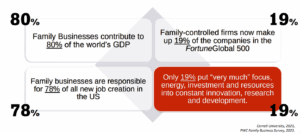
Figure 1: Relevant data about family businesses globally
Innovation, however, is where the challenge lies. While some believe family businesses avoid risk to protect their legacy, others argue they can be bold innovators when survival depends on it. Leadership plays a key role in this equation. Do family CEOs, with their deep emotional ties, make different choices compared to non-family CEOs who bring professional distance and structure?
That was the question at the heart of my doctoral research at Geneva Business School, where I explored the role of CEOs in shaping innovation within Turkish family businesses.
The Research Journey
This research is deeply personal to me. As a manager in my own family business, I have often seen how values, traditions, and leadership choices influence innovation and risk-taking. That perspective motivated me to step back and study the issue systematically through my DBA.
The program provided not only academic rigor but also opportunities to share my work with the wider world. Alongside my dissertation, I was able to publish an article in MDPI Administrative Sciences, contribute a chapter to the Routledge book Innovation and Entrepreneurship in the Family Business, and even present my findings as a speaker at the United Nations General Assembly. Each of these experiences reinforced how valuable it is when academic research connects with practice.
The journey wasn’t without challenges. Gathering reliable data from family firms in Türkiye required trust, confidentiality, and persistence. But it was also rewarding: patterns emerged that resonated strongly with what I had observed in practice, confirming the importance of bridging lived experience with academic insight.
Key Findings
The central finding of my study is that CEO type—family or non-family—is not the sole determinant of innovation outcomes. Instead, innovation in family businesses is influenced by a complex mix of governance structures, cultural values, and strategic priorities.
Here are the main insights in plain language:
- It’s not just about who the CEO is. Family and non-family CEOs both influence decision-making, risk-taking, and technology adoption in ways that are often more similar than different.
- Non-family CEOs bring structure. They tend to emphasize formal innovation management and clearer systems.
- Family CEOs bring emotional commitment. Their attachment to the legacy and identity of the firm can inspire long-term vision but also shape cautious decision-making.
- Culture and governance matter more than titles. Many of the differences assumed to be about CEO type are really about firm culture, governance, and generational context.
- Legacy remains powerful. The desire to protect and pass on family values is a defining feature of leadership in Turkish family businesses.
In short, innovation is not determined by whether the CEO is a family member. It is the interaction between leadership style, governance mechanisms, and cultural priorities that makes the real difference.
Implications and Recommendations
For family businesses and their advisors, several lessons stand out:
- Build systems, not personalities. Innovation should not rise or fall with the CEO. Firms need governance and processes that support new ideas regardless of leadership changes.
- Harness complementary strengths. Family CEOs can provide vision and emotional drive, while non-family CEOs can contribute structure and objectivity. Together, these strengths create resilience.
- Invest in readiness. Transparent governance, technological infrastructure, and a culture of openness make innovation sustainable.
- Engage the next generation. Younger family members can act as bridges between tradition and change, ensuring adaptability in fast-moving industries.
These insights remind us that innovation in family businesses is not about choosing one type of leader over another, but about creating the conditions where different leadership strengths can be combined.
Conclusion
Innovation in Turkish family businesses is not defined by whether a CEO is a family or non-family member. It is shaped by the interplay of leadership, governance, culture, and legacy. For practitioners, the message is clear: build structures that combine continuity with adaptability, and innovation will follow.
This research is just the beginning. I hope future studies will look deeper into how generational shifts, digital governance, and cross-cultural perspectives continue to shape the story of innovation in family firms.
About the Author
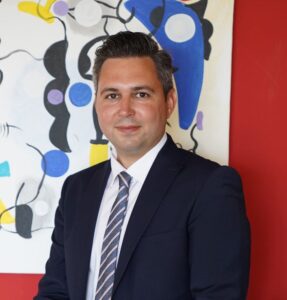
Dr. Saltuk Karayalcin is Vice Chairman of Kurtsan Group and a DBA graduate of GenevaBusiness School. His expertise lies in strategic planning, family business governance, and innovation management. He has published in MDPI Administrative Sciences, contributed to the Routledge book Innovation and Entrepreneurship in the Family Business, taught at various Universities, and spoken at the United Nations General Assembly.